


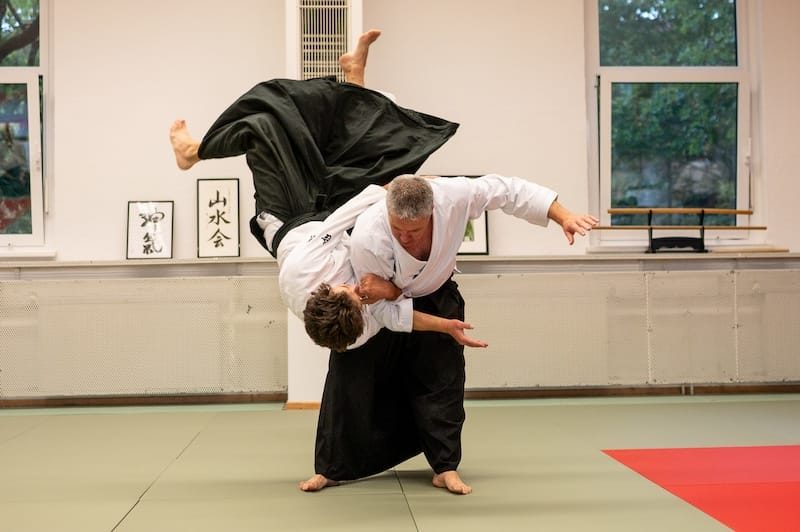
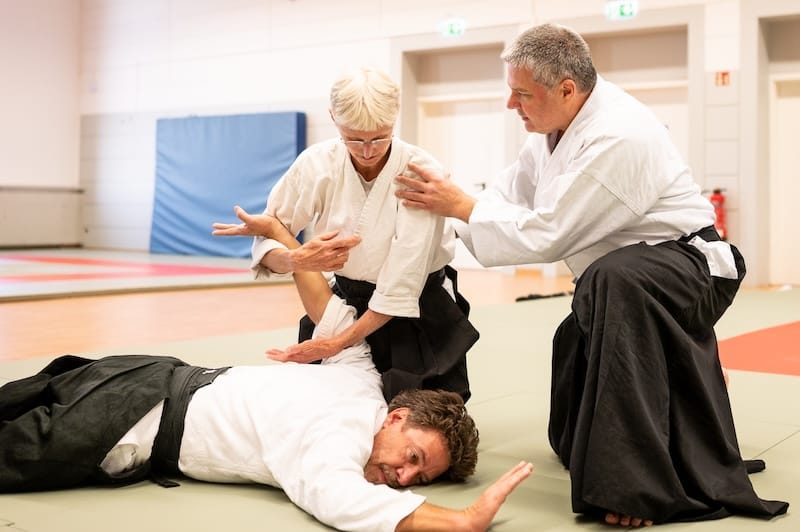
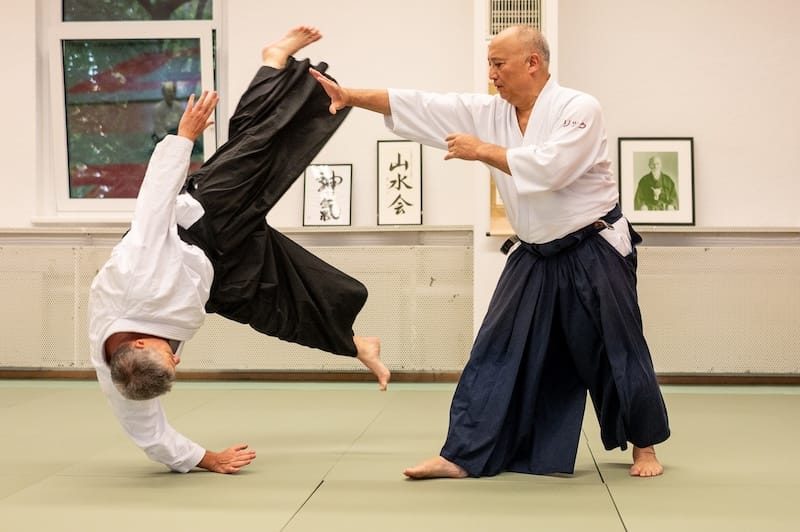
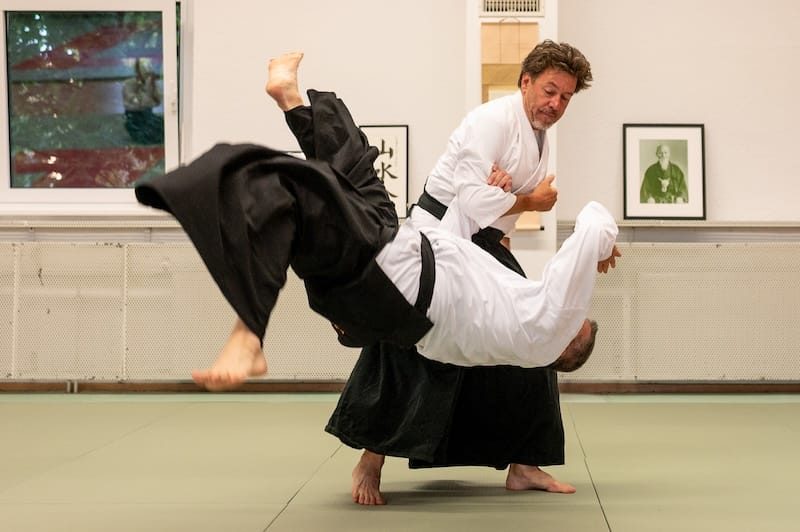
Current information from the dojo
A look at the kyu exams: Some of our kyu-level aikidoka are currently working hard to prepare for their upcoming kyu examinations in October and April. It’s lovely to see how much dedication and focus they’re putting into this preparation — from practising the basic techniques extra to supporting one another on the mat. We wish all candidates every success and ‘Ganbatte’ on their journey to the next level!
On 30 August 2026, Tamás was awarded his 4th dan (yondan) and his Shidoin (Instructor) certification — congratulations, Tamás!
On 9 July 2026, Alejandro was awarded his 4th Dan (Yondan) and Shidoin certification (Instructor), whilst Claus was awarded his 2nd Dan (Nidan) and Fuku-Shidoin certification (Assistant Instructor). Congratulations to you both on this wonderful recognition of your commitment to our dojo.
Congratulations to Karl on successfully passing his Sandan exam (13 June 2026)!
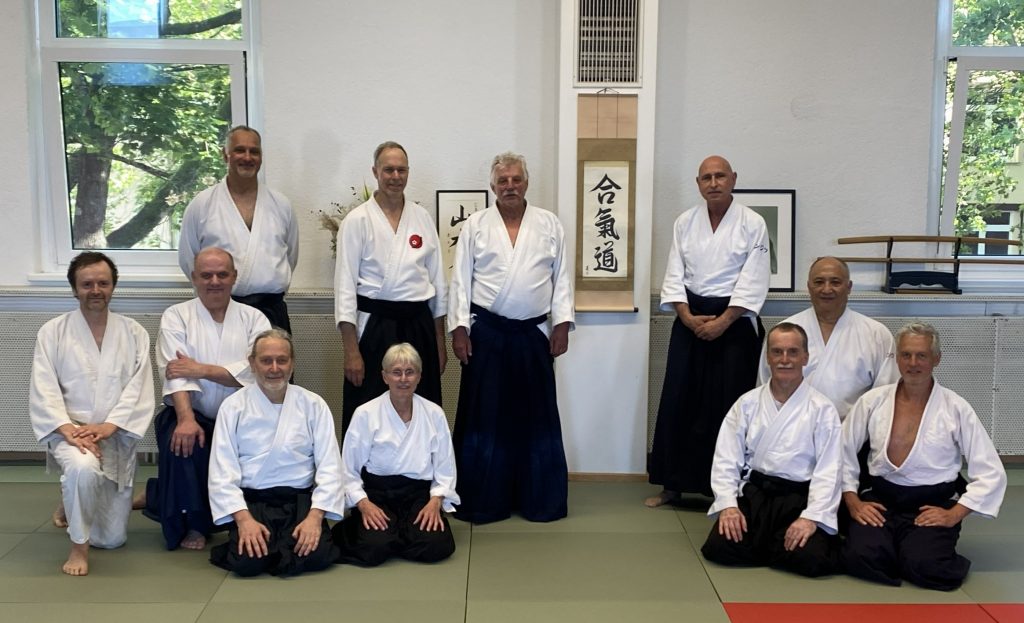
Upcoming courses in our dojo
We successfully completed our final Aikido course of 2026 with Lia Suzuki Sensei, 7th Dan Shihan (Aikikai), on 14 and 15 September. Lia Sensei really enjoyed her time with us and is already looking forward to seeing us again. A heartfelt thank you to everyone who helped organise the event, and to everyone who joined us for these two special evenings with her.
Our next scheduled Aikido course is the 2027 Aikido Shinki Rengo Dan Course, which we received on 13 and 14 March 2027 at our dojo. Everyone from 1st kyu upwards (from all styles) is welcome. Further information on registration will follow in the coming months.
Aikido - "The path of harmony and strength"
"Everyone has a mind that can be honed, a body that can be trained in some way, a path to follow."
Morihei Ueshiba (1883-1969)
Welcome to our dojo
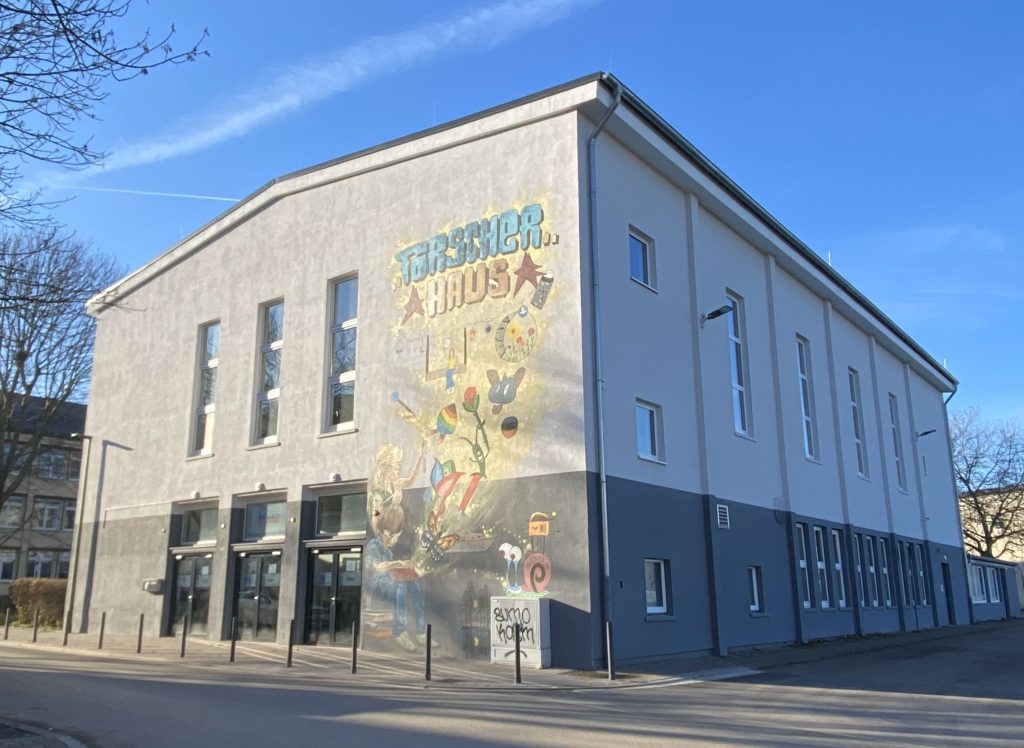
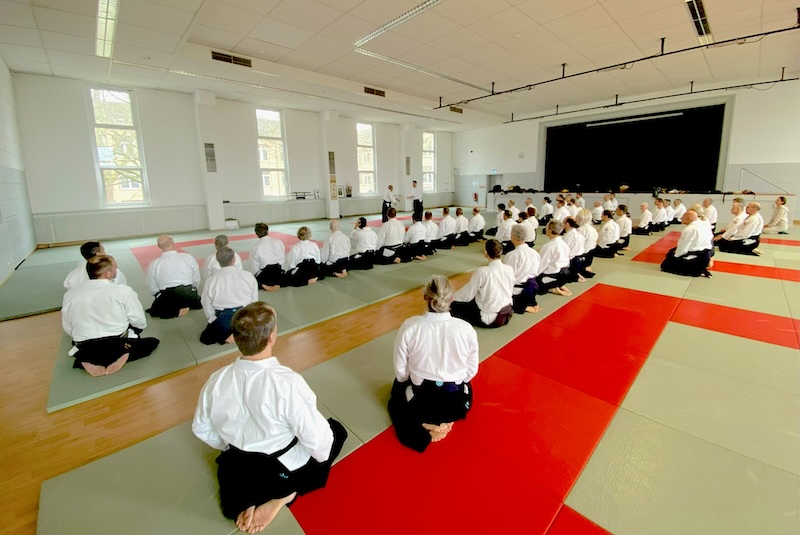
Welcome to the Aikido dojo of the Heidelberg Police Sports Club (PSV) e.V. Whether you’re curious to try a martial art for the first time or are looking for a new dojo to call home – you’re welcome to join us on the mat.
Founded in 1985, the Aikido Dojo of the Heidelberg Police Sports Club (PSV) e.V. has been practising traditional Aikido for more than four decades. As a dojo with roots in the Aikikai Hombu Dojo lineage, we are committed to preserving the teachings of Morihei Ueshiba (O-Sensei), the founder of Aikido, whilst fostering an atmosphere of mutual respect, continuous learning and personal growth.
Our dojo offers a very active training programme with experienced instructors ranging from 1st dan (Shodan) to 6th dan (Rokudan). We train both adults and young people, and every year we host the International Aikido Shinki Rengo Dan Seminar, as well as several seminars at Shihan level, which attract aikidoka from the region and from all over the world.

!!! Do not change or delete this line – it is required for the submenu !!!
Are you curious about Aikido – or are you already an Aikidoka and new to Heidelberg? In this section, you’ll find everything you need to know to get started: from your first free training session and the 6-week introductory course right through to the basics of what Aikido actually is and who it’s suitable for. Whether you’re starting out as a beginner, getting back into it after a break, or just popping in as a visitor – this is where it all begins.
Here you’ll find all the information about our training times, youth training and adult training – as well as details for aikidoka from other dojos who’d like to train with us. Whether you’re looking for a training partner, searching for a new dojo in Heidelberg, or simply want to experience a different training atmosphere: this section will show you when and how you can train with us.
Current information: Adult training sessions run throughout the year. Youth training sessions are usually cancelled during the school holidays; any cancellations will be announced here.
| Monday | 7:00 p.m. – 8:30 p.m. | Adult beginners / Intermediate / Open training sessions |  |
| Tuesday | 5:00 p.m. – 6:30 p.m. 6:30 p.m. – 20:00 | Youth training (aged 12 and over) Adults – Intermediate level / Taster course / Beginners* | |
| Thursday | 6:30 p.m. – 7:00 p.m. | Adult weapons training / open training |  |
| 7:00 p.m. – 8:30 p.m. | Adults: Advanced / Intermediate / Taster course / Beginners* | | |
| Sunday | 8:00 a.m. – 10:00 a.m. | Adults: Advanced / Intermediate (focused training) and Exam preparation (5th Kyu – 4th Dan) | |
Visitors (non-members of the PSV Heidelberg) You’re always very welcome here. You’ll find everything you need to know about your visit – a free first session, the dojo fee after that, training passes and how to register – in the section „Visitors / Aikidoka from other dojos“ below. In short: please send us an email before your first visit so that the coaching team can welcome you.
Aikido youth training – becoming strong without fighting
Aikido is a non-competitive Japanese budo sport. It is not about scoring points, but about body awareness, balance and respect.
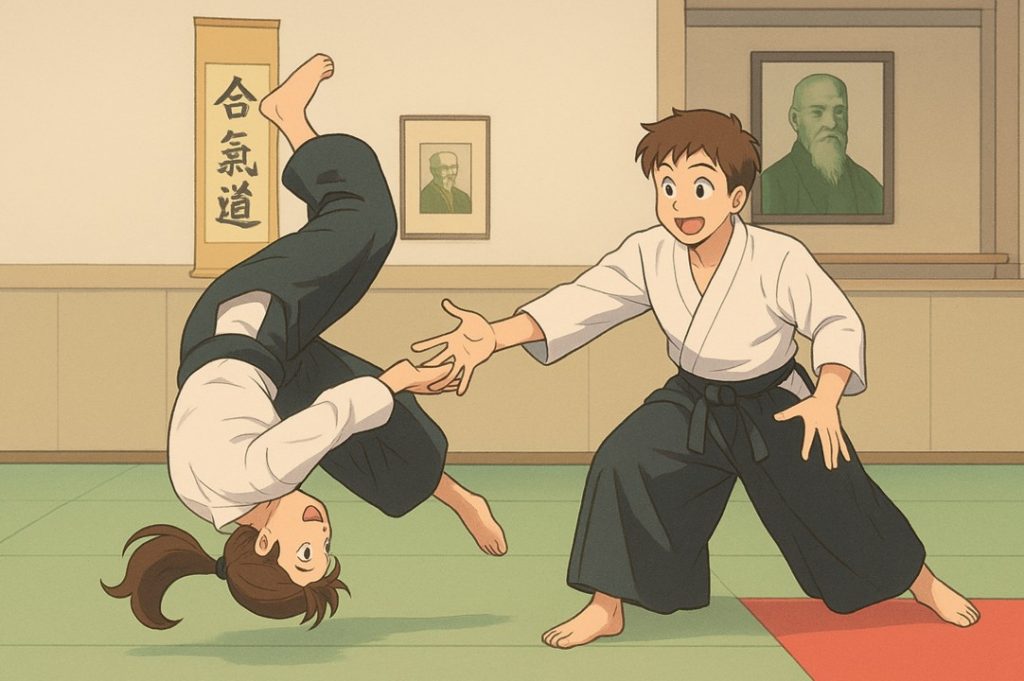
Meaningful exercise, focused energy and a sense of community without competition – every Tuesday from 5.00 pm to 6.30 pm in Südstadt. Aikido is a Japanese martial art with no competitions. It’s not about scoring points, but about body awareness, balance and respect.
Our youth training sessions are generally aimed at children and young people aged 12 and over. In justified individual cases, the youth coach will decide whether younger children may take part.
If you’d like to give it a go, you’re welcome to pop in for a free taster session at any time. After that, you can join our 6-week taster course for €25.
Tuesday, 17:00-18:30
Location: Dojo of the Polizeisportverein Heidelberg e.V.
Auditorium of the F&U Schools, Elsa-Brandström-Str. 8, 69126 Heidelberg
#Aikido #Youth training #Heidelberg #PSV #PSV-HD #Martial arts #BudoKids #Movement #Sports club #Introductory course

Your trainers Markus Krabel and Heidi Kaschub We’ll guide you with experience, patience and a love of training – safely, respectfully and authentically. Just pop in – comfortable clothes are all you need.
Sign up for your child’s first free trial session (for children aged 12 and over) & further information: Youth training is generally aimed at children and young people aged 12 and over. In justified individual cases, the youth coach will decide whether younger children may take part.
As soon as your child has completed the trial training and you have agreed with the youth coaches, you can book the 6-week course:
If you’re an aikidoka from another club or dojo, you’re always very welcome here – whether you’re just visiting, have moved to Heidelberg or are looking for a new regular dojo.
- Your first session at the adult training class is free.
- After that, you can continue training using training cards; we charge a small dojo fee per session.
- You can purchase training passes for Aikido sessions directly here on the website or via the QR code; each pass is valid for any training day of your choice.

Aikido Multi-Session Training Cards (Training Cards)
Please Get in touch Please send an email before your visit so that the coaching team can welcome you and, if necessary, recommend a suitable training session for you.
Here you will find the latest announcements regarding upcoming seminars – for members of our dojo as well as for aikidoka from other clubs and dojos.
Please do come along to our seminars – we’d love for you to train with us and develop your skills.
Aikido is more than just technique – it is a way of life underpinned by the values, ideas and principles of its founder. In this section, you will learn more about the history of Aikido, about Morihei Ueshiba (O-Sensei), the founder of Aikido, and the development of this art, as well as the fundamental concepts of Ai, Ki and Do. You’ll also gain an insight into how these principles come to life in practice and during group training.
Aikido is one of the more recent Japanese martial arts. Its founder, O-Sensei (Grand Master) Morihei Ueshiba, was born on 14 December 1883 in Tanabe, Japan. He began practising Budo as a teenager – initially focusing mainly on spear and sword training, before later adding various styles of Ju-Jutsu.
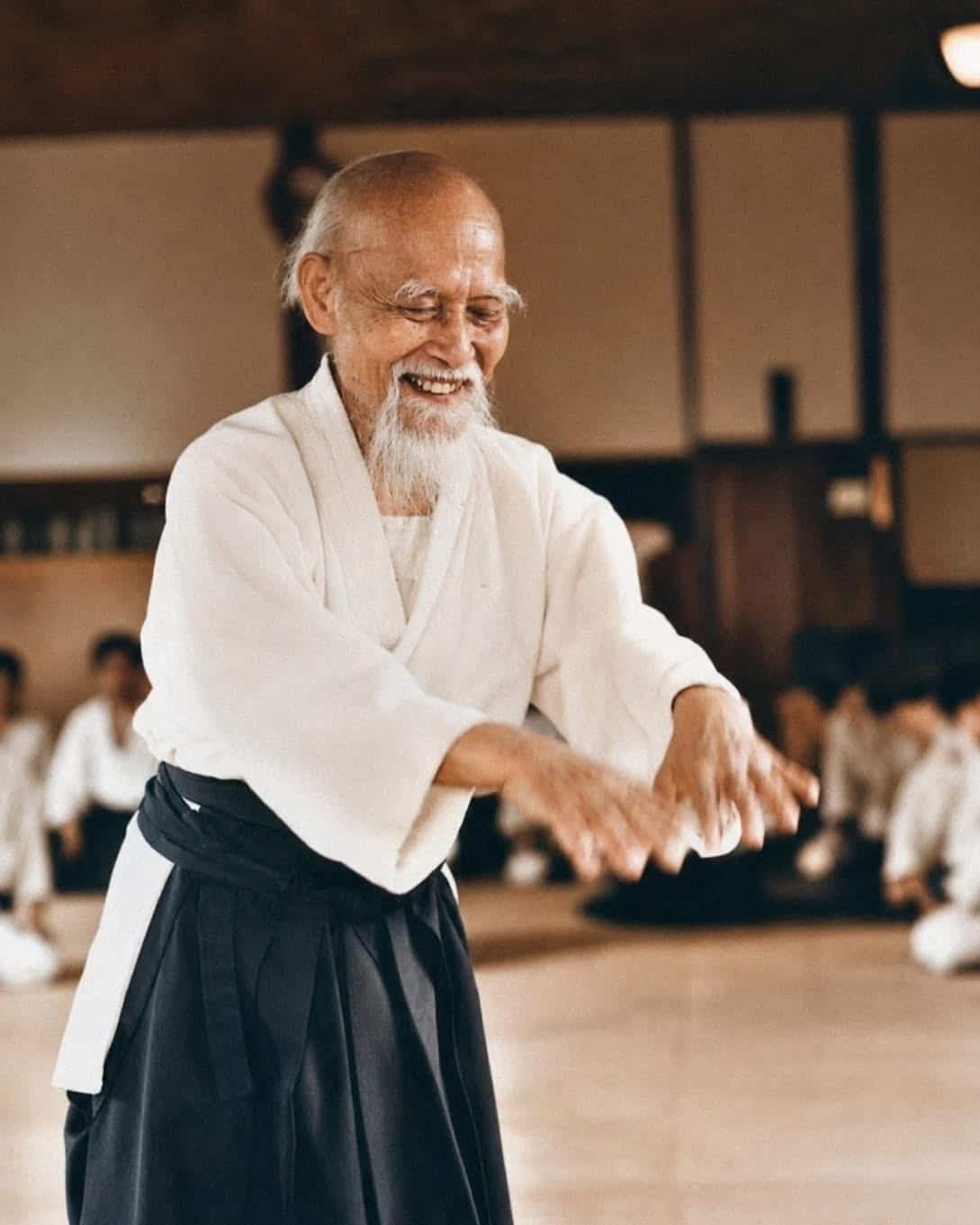
A decisive turning point came in 1911 when he met Sokaku Takeda, the master of Daito-Ryu, from whom Ueshiba received comprehensive training in this art. Around 1919, he met the monk Deguchi Onisaburo, whose spiritual teachings led him to fundamentally question the principles of the martial art he had practised up to that point.
As a soldier in the Russo-Japanese War, Ueshiba had experienced death and destruction at a young age and come to realise the futility of warfare. These experiences led to a break with his former teacher, Takeda, in 1922. In the years that followed, Ueshiba continued to develop and refine his martial art until it took on the form we know today as Aikido. From 1942 onwards, he officially named his art Aikido. Master Ueshiba died on 26 April 1969 in Iwama, Japan, at the age of 85.
It is precisely from this combination of martial arts and inner attitude that the values which characterise our dojo today have emerged: Aikido as a path of harmony, of treating one another with respect, and of lifelong learning.
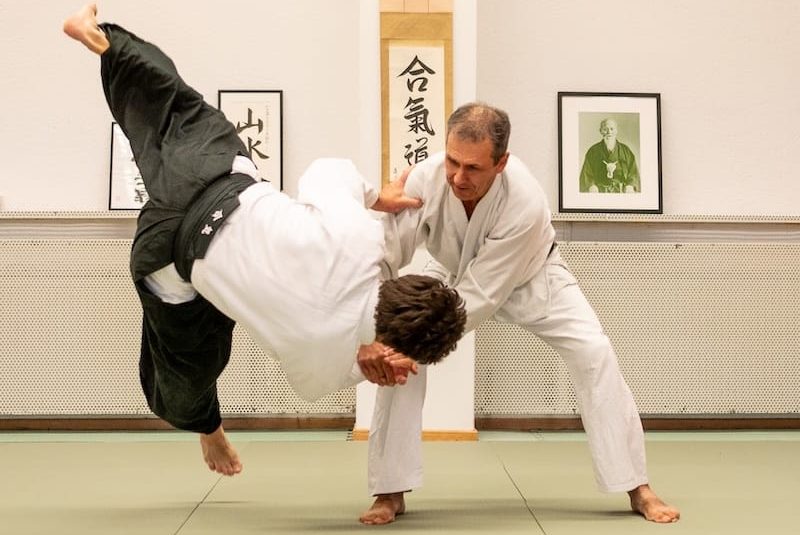
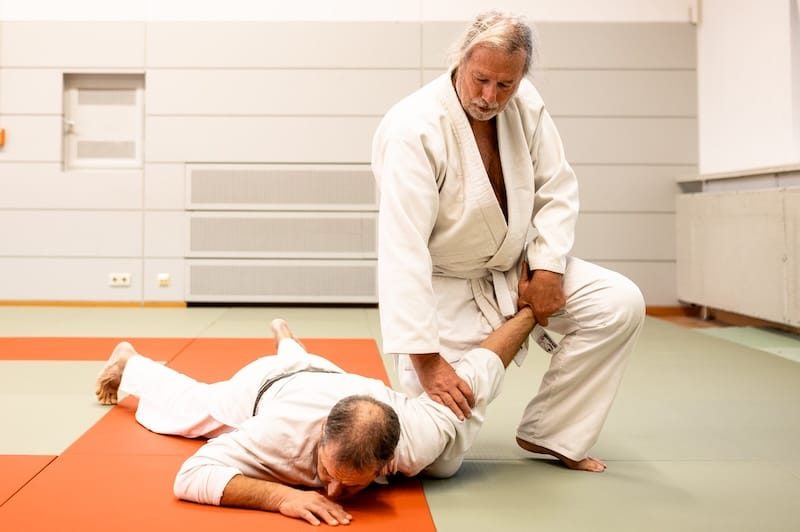
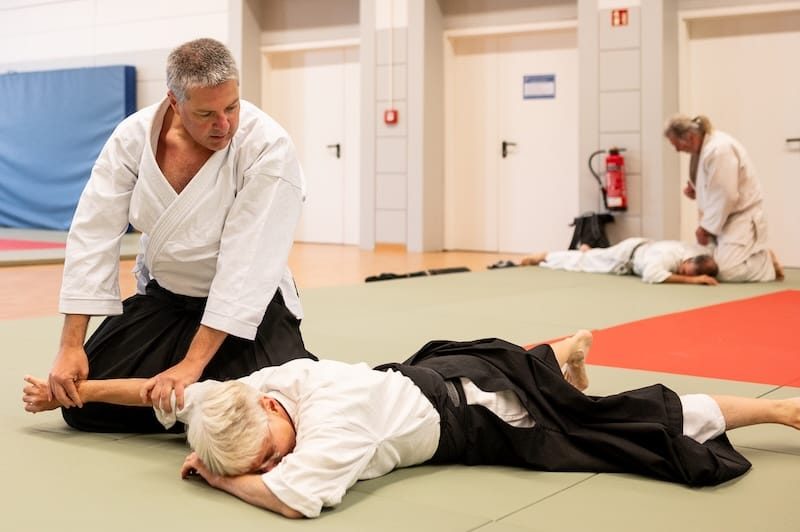
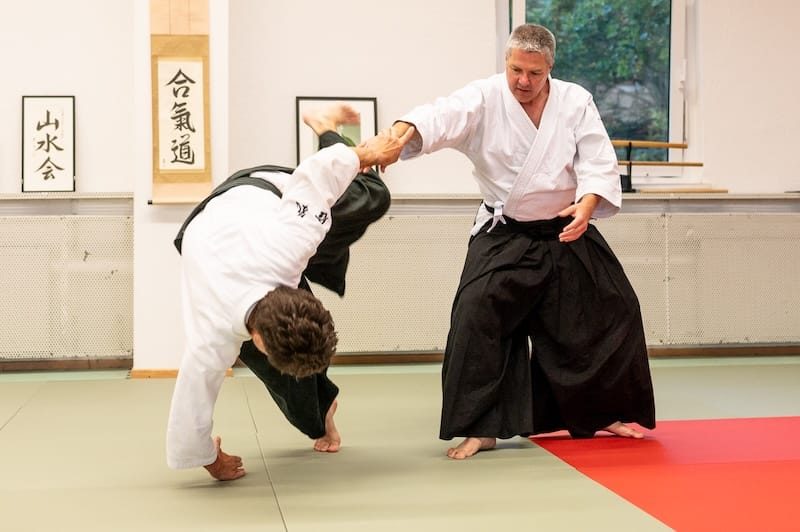
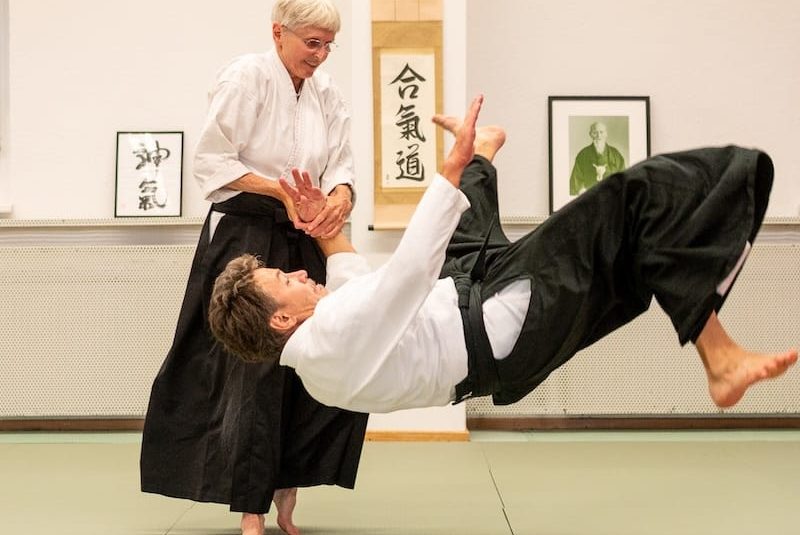
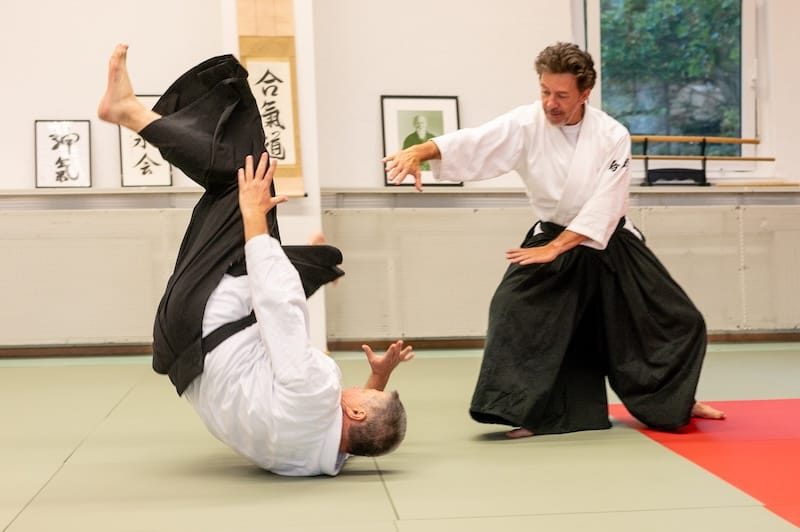
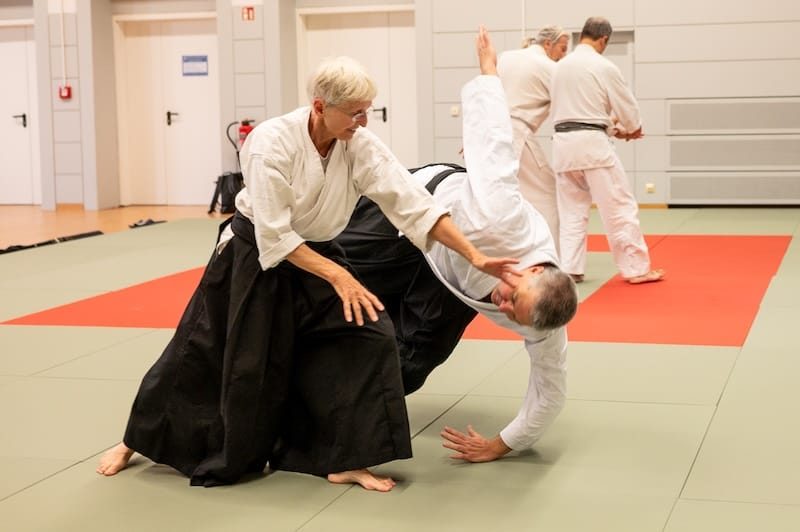
The philosophy of Aikido is based on a simple principle: harmony. Instead of meeting force with force, we learn to absorb an attack, redirect its energy and neutralise it – the aim is always to control our partner, „Uke“, without causing them harm. This shapes our entire training. If you connect with your attacker’s energy rather than confronting it head-on, and disrupt rather than overpower by evading and throwing them off balance, aggression simply has little to work with.
What Aikido is not perhaps says just as much as what it is: it is not a crash course in self-defence, nor is it acrobatic Kung Fu, nor is it pure meditation – even though it touches on elements of all three. Aikido engages the whole person: body, mind and spirit together.
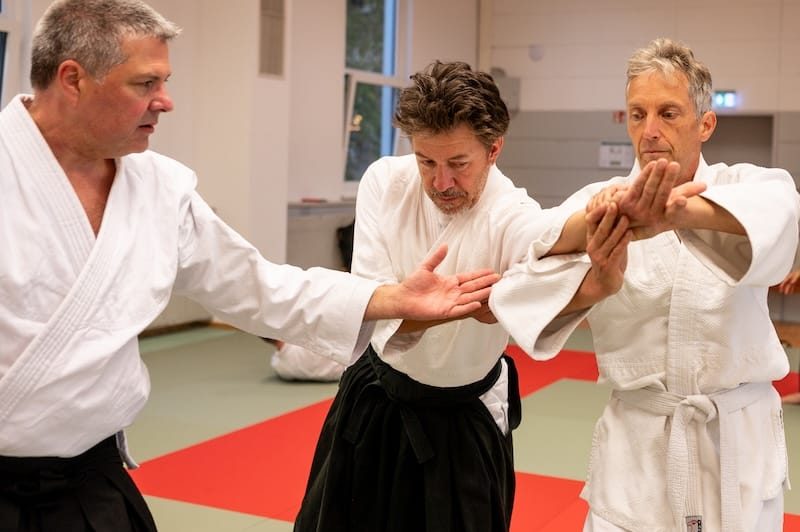
On the mat, everyone is both a student and a teacher. There are regular introductory courses for beginners, but in day-to-day practice everyone trains together, regardless of their level of experience – someone who is just learning to fall safely trains alongside someone with decades of experience. This is precisely where the true strength of Aikido lies: not in competition – for there are no winners or losers here – but in a close-knit community built on cooperation and mutual respect. We call this the Way of Harmony and Strength – Aikido no Michi – and this path never truly ends. There is always something new to learn, and often the best measure of a good training session is simply that calm, contented feeling on the way home, somewhere between pleasant tiredness and anticipation of the next session.
Ai – Ki – Do: Harmony, Energy, Way
The basic principle behind aikido techniques is to evade the linear force of an attack by means of a turning movement and to redirect the attacker’s momentum into a circular motion. This throws the attacker off balance, allowing them to be thrown to the ground and held there.
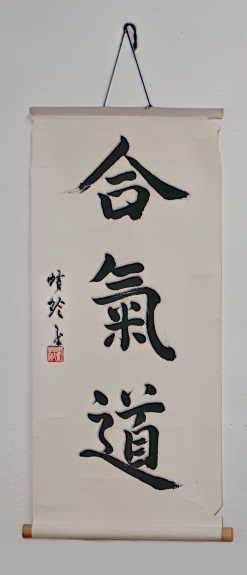
Ai (Harmony) - connect, unite, adapt
Harmony means that you do not meet your opponent’s force head-on, but instead evade it and continue the attacker’s movement together.
Ki (force) - Spirit, energy, inner strength
Ki is not strength in the conventional sense of physical power, but rather mental calm, willpower and mindfulness. It enables you to recognise your opponent’s energy in good time, evade it and redirect it.
Do (way) - Path, development
It takes time for the various movements to become second nature. At the same time, constantly working on your posture and movements – mindfully defending yourself against an attack from your own centre – can lead to greater calm in everyday life. Do also refers to a path to yourself, to your own centre. This path is never-ending.
Our dojo is a community of people who enjoy practising Aikido and learning from one another. In this section, you can get to know our team of instructors, find information on how to conduct yourself in the dojo (code of conduct) and find out how to get in touch and become part of our club community.
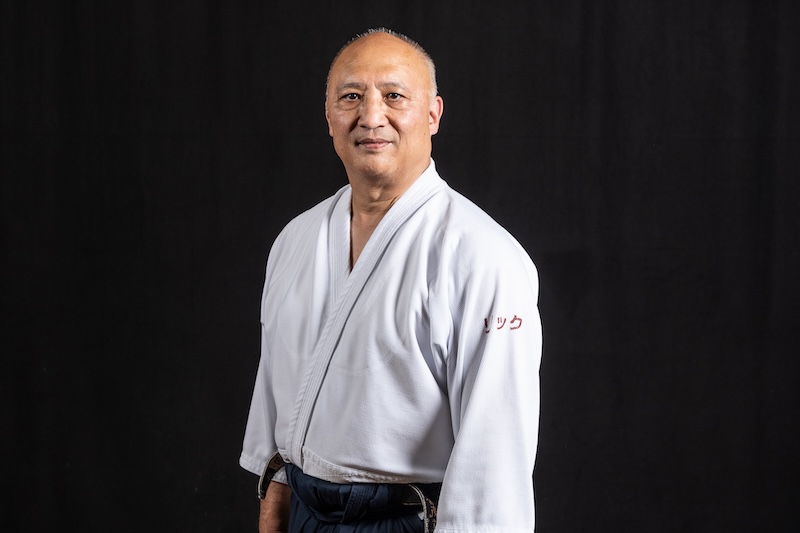
Aikido department head
6th Dan Aikido, Shidoin
4th Dan Daitoryu
I have been practising Aikido for more than half of my life.
On the mat, movement becomes meditation. Attention rests in the present moment. Past and future recede into the background. Only the now remains.
Through Aikido, I have learnt to face life with more calm. Stress becomes softer. A smile emerges. When I see others smiling, I feel brief moments of clarity, satori.
My Aikido is based on simple principles: solid foundations, sensitivity, adaptability, ethical behaviour and constant refinement.
Every sensei, sempai and kohai has helped to shape this path. Not just a martial art, but a path on which body, mind and soul become one.
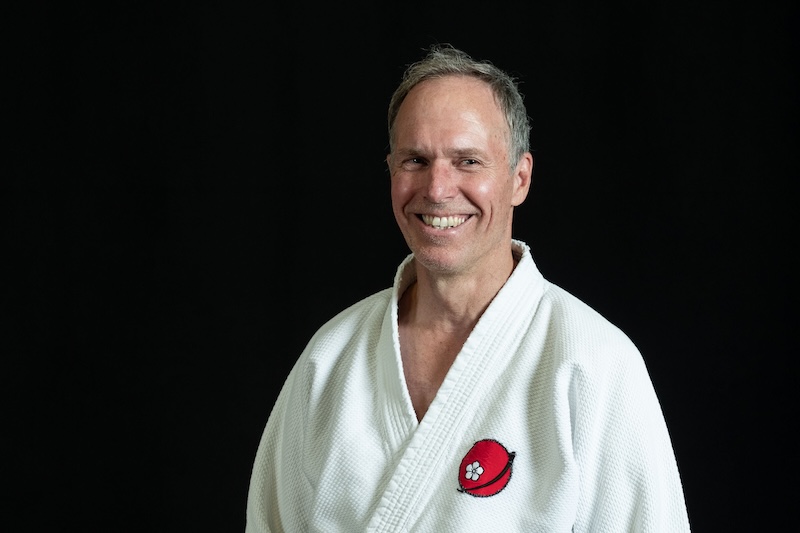
Shinki Rengo Aikido Dojo-Cho
5th Dan Aikido, Shidoin
Jun-Dairi-Kyoju 4th Dan Daitoryu
I came to aikido through sport. I was interested in all kinds of sports in my youth, including martial arts. I gained my first experience in karate before I learnt about aikido. Faced with the choice of continuing to practise one or the other, I decided in favour of Aikido.
I was fascinated by the endeavour to preserve the integrity of the opponent, even in the most violent confrontation. And I liked, and still like, the soft, flowing movements.
Over the years, I had to give up many a sport, but I continue to practise Aikido: as a challenge and a goal for myself to progress further, for the joy of movement, together with like-minded people. And to teach this way: to end conflicts in the most considerate way possible.
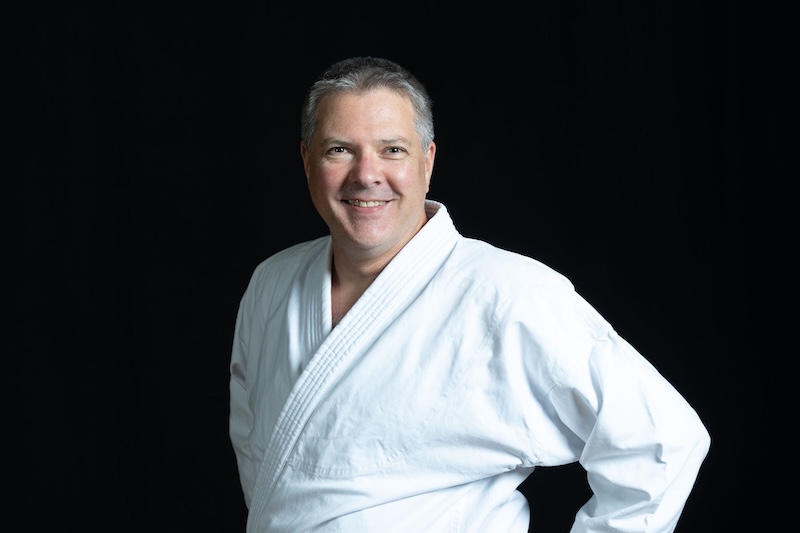
PSV HD e.V. 1st Executive Board
5th Dan Aikido, Shidoin
3rd Dan Daitoryu
I began practising Aikido as a lively youngster because I was fascinated by its dynamic athleticism and simple beauty of form.
The intensive and holistic training has always accompanied my personal development in a positive way, even outside of training - encouraging and challenging is a core element that I was able to experience in Aikido.
The great community in every Aikido group I have trained with since then, and especially the various trainers, have always opened up new perspectives for me in Aikido and beyond. This makes Aikido an indispensable ‚lifestyle‘ for me to this day.
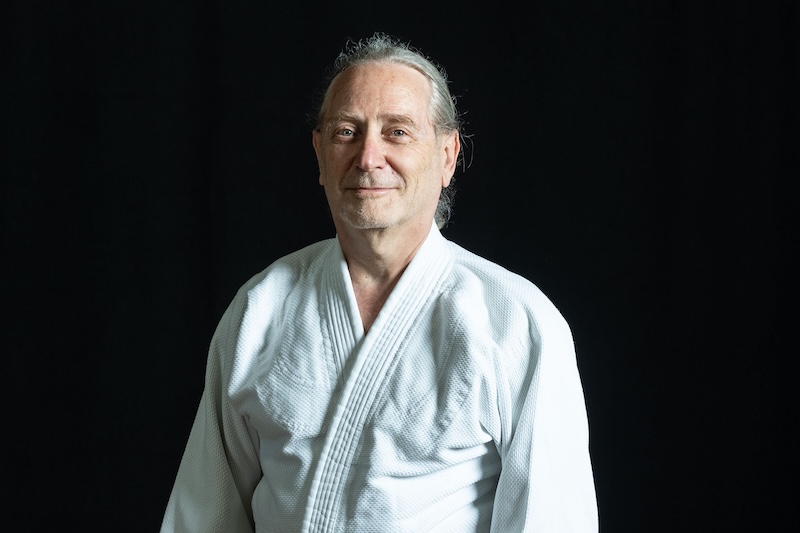
4th dan in Aikido, Shidoin
2nd Kyu Daitoryu
When I started with Aikido many years ago, I was very quickly enthusiastic about both the movements and the spiritual aspects of this (martial) art.
In training, we learn to move "harmoniously" so that conflicts can be avoided or defused. Conflicts with ourselves and with our partner. Respect for our partner is always part of this.
For me, it is a path of harmony, both physically and spiritually. You also try to seek, live and experience this harmony in your daily life: To avoid arguments, to be open to new things and to find joy in being with each other.
You never stop learning new things and having fun with movement. Whether new or familiar techniques: there are always new angles in the techniques.
That's why Aikido has been part of my life for several decades.

2nd Board PSV and Aikido Department
Sansuikai Germany Dojo-Cho
3rd Dan in Aikido, Fuku-Shidoin
Zendo leader level 1 Daishin-Rinzai-Zen
2nd Kyu Muso Jikiden Eishin Ryu Iaido
5th Kyu Daitoryu
When I was looking to get back into sport shortly after my 51st birthday, I came across Aikido purely by chance.
Without any previous knowledge of other martial arts, I was thrilled from the very first moment, because what I experienced in training was so different from what I had previously experienced in sport: from the very first training session, Aikido showed me how to integrate body and mind, how to become „complete“.
That hasn’t changed to this day; in fact, it has continued to develop. Aikido has simply become „my thing“ and is now an integral part of my life that I can no longer imagine living without.

2nd Dan Aikido, Fuku-Shidoin
4th Kyu Daitoryu
Claus is the assistant instructor for beginners. His vast experience in Aikido helps beginners overcome obstacles and develop a deeper understanding of the Aikido techniques they need to know in order to build a firm and stable foundation for their progress in the Japanese art of Aikido.
His calm nature and his desire to help others are important for the development of our beginners and the future of our Aikido programme.
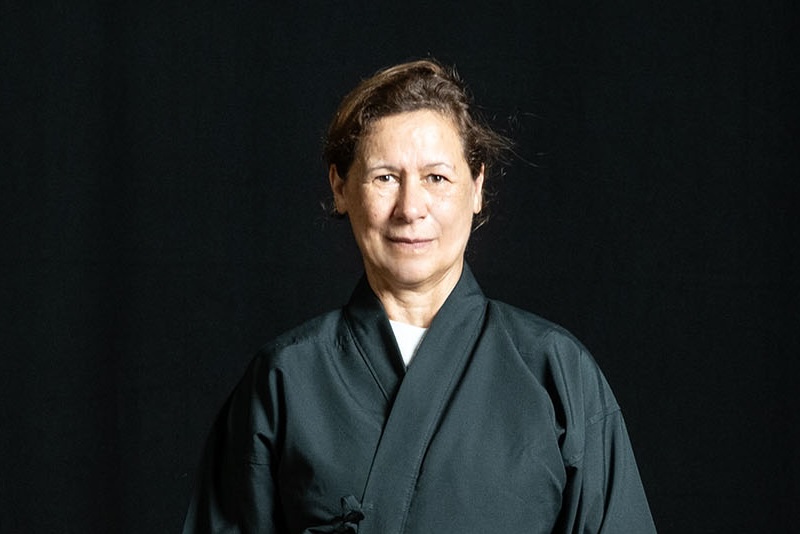
1st Dan Aikido
2nd Kyu Muso Jikiden Eishin Ryu Iaido
„Aikido is the art of harmony, of gaining control over your opponent without fighting“.
This quote from my Sensai Kosaku Takano in Japan describes Aikido as I feel it. We lived in Tokyo from 2004 to 2008, where I had the unique opportunity to get to know and love Aikido in its pure traditional form.
It’s been on my mind ever since.
Would you like to receive news and information from the Aikido-Dojo of the PSV Heidelberg e.V.? Then simply send us an e-mail.
Yes, I’d like to receive news and updates
I’ve still got a few questions before I sign up
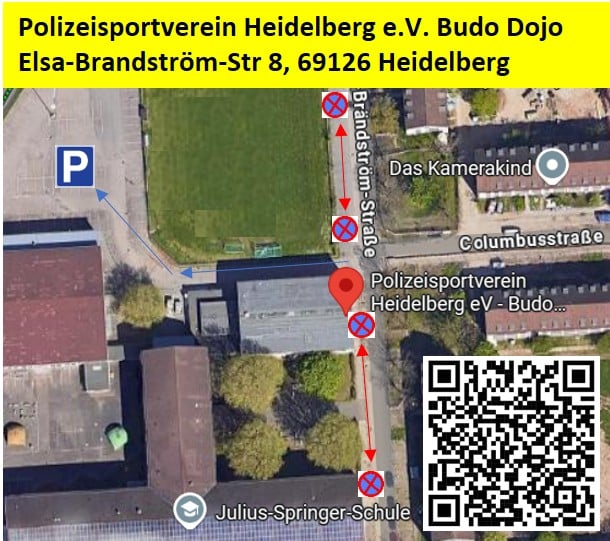
Training venue
Heidelberg Police Sports Club (e.V.) Budo Dojo
PSV Heidelberg e.V. Budo Dojo
Auditorium at the Julius Springer School
Elsa-Brandström-Strasse 8
69126 Heidelberg
You can park north-west of our dojo in the car park at the Julius-Springer School (see the car park sign). Please do not park along Elsa-Brandström-Straße. Parking fines can be expensive.
.
Through practice and experience. A dojo is not simply a gym or a sports hall; it is a community of like-minded people and the result of many years of teaching and learning.
Aikido is more than just a physical form of self-defense. It is a way for physical, mental and spiritual advancement and the greatest understanding is gained when each action is done with mind, body and spirit acting in harmony. We treat each other with respect and courtesy to create harmony within ourselves and with our partners. Following proper etiquette is therefore an important part of the practice of Aikido.
To benefit and enjoy training in Aikido, to create an atmosphere of mutual respect, and for reasons of safety, there are certain rules of etiquette.
- Study carefully, honestly and humbly. Respect your instructor and your seniors. Take care of and assist your juniors.
- Emphasize etiquette in both yourself and those with whom you practice.
- The class is started and finished with a formal bow towards O-Sensei and the instructor.
- If you are late for class, bow in alone, after the instructor gives you permission to enter the tatami.
- Practice in a safe manner and respect the level of experience of your training partner.
- For personal safety and to protect others, remove jewelry and piercings before training.
- Observe personal hygiene before you step on the mat and practice with a clean Gi.
- If you are cut, leave the mat and dress your wound before resuming training.
- Class is a time and space reserved for practicing Aikido.
- Punctuality is a sign of respect for the training partners and the teacher. Anyone who can foresee that they will be late should let us know in advance.
In addition, anyone practicing in the dojo has to adhere to the following rules:
- Observe regulations that relate to the use of the dojo, such as legal regulations or the rules of our landlord.
- Do not be uncooperative with your partner.
- Students thought to be under the influence of alcohol or drugs will not be permitted in the dojo.
- The use of bad language is not permitted in the dojo.
- Harassment, bullying or aggressive behaviour are not tolerated.
- Do not to use Aikido techniques unethically and or illegally inside or outside the dojo.
- Do not to bring our dojo into disrepute through your words or actions.
If you fail to adhere to these basic rules repeatedly, we may ask you to leave class or the dojo.
Our dojo is part of the wider aikido community: we are members of various federations, maintain contact with other dojos through seminars and visits, and organise practical matters ranging from equipment to the chat app. In this section, you’ll find everything you need to know about our association membership, the dojos we’re connected to, equipment information (a list of retailers and the Teamshop), as well as details about the club room app for members.
Aikidoka from all these groups are equally welcome at the dojo – and not just for a taster session.
Some of our coaches also come from different schools and structure their sessions accordingly; we see this diversity of approaches as a great asset.
Today, the majority of our members train at Aikido Shinki Rengo under the guidance of Michael Daishiro Nakajima Shihan (7th Dan, Aikikai Hombu Dojo; 10th dan, Daitoryu Aiki Jujutsu Bokuyokan), whilst some members also train with Aikido Sansuikai Germany or other international Aikido organisations, where they have attained their ranks. Both Aikido Shinki Rengo and Aikido Sansuikai Germany are proud members of the International Aikido Federation (IAF). We see this diversity of traditions as a strength – underpinned by our shared commitment to authentic Aikido and the principles of harmony, respect and lifelong learning.

Aikido Sansuikai Germany
Some of our aikidokas also belong to a small group of aikido dojos in southern Germany and Switzerland. Sansuikai Europe originated from a group of students of Y. Yamada Shihan, who attended his seminars for years or liked to participate in the New York Aikikai (NYA) trained. Sansuikai International Europe was the United States Aikido Federation (USAF) and of the Aikikai Hombu Dojo in Tokyo. After the death of Yamada Sensei, Sansuikai groups can now join the Aikikai Hombu Dojo directly. Unfortunately, a European association is no longer recognised by the Aikikai Hombu Dojo in Tokyo; this is only possible on a country-by-country basis. The PSV Heidelberg Sansuikai Dojo has therefore joined Sansuikai Germany.
Aikido Shinki Rengo
Due to the affiliation of the Aikidoka active with us, there is a clear focus on Aikido Shinki Rengo, which is taught by Michael Daishiro Nakajima (7th dan, Shihan – Aikikai Hombu Dojo, 10th dan, Shihan – Daitoryu Aiki Jujutsu Bokuyokan) is managed.
The majority of our currently active aikidokas are his disciples and take their exams through his association. This is affiliated to the Aikikai Hombu Dojo .
International Aikido Federation (IAF)
Aikido Sansuikai Germany and Aikido Shinki Rengo are proud members of the IAF.
PSV Heidelberg e.V. Aikido Sansuikai Germany Dojo is a proud member of Aikido Sansuikai Germany
Aikido Sansuikai Germany Dojos
PSV Heidelberg e.V. Aikido Shinki Rengo Dojo is a proud member of Aikido Shinki Rengo
Dojos outside the association
Adelheid-Dojo Wiesbaden (Wiesbaden, DE)
Aikido Aishinkan Kumamoto (Kumamoto, JP)
Aikido Frankfurt (Frankfurt, DE)
Aikido Kenkyukai Los Angeles (Los Angeles, California, US)
Aikido Oberursel (Oberursel, DE)
Aikido of Red Bank (Keansburg, New Jersey, (US)
Aikido School Mannheim (Mannheim, DE)
Aikikikai Aikido Enkhuizen (Enkhuizen, NL)
Movement & Art of Living (Bonn, DE)
New York Aikikai (New York, New York, US)
Aikido associations
Aikido-Union Baden-Württemberg (AUBW)
Aikido Cooperation International (ACI)
Aikido Federation Germany (AiFD)
Federal Association for Aikido in Germany
Traditional Aikido Europe (TAE)
Professional organisations
Professional Association for Aikido in Bavaria (FAB)
PSV Heidelberg e.V. Aikido Dojo is a proud member of the FABW.
For your first training sessions, simple sportswear will do: a pair of long training trousers and, ideally, a long-sleeved T-shirt. Also bring some shower shoes for the walk from the changing room to the dojo; training is done barefoot, and you can wash your feet in the changing room before training.
Once you’ve started, a budo-gi (jacket, trousers and fabric belt) is the appropriate attire. A standard judo suit is well suited to aikido and is available from around €30 in specialist budo shops or online. Advanced aikidoka may also wear a hakama – a traditional Japanese split-skirt in black or dark blue. At our dojo, the instructor may allow or recommend wearing the hakama after the first grading.
You can find a complete list of recommended retailers for aikido equipment – including dogi, hakama, bokken, jo and tanto – in our retailer directory.
Note: This list contains suppliers of Aikido equipment, which we have compiled to serve as a guide. We do not rate the shops and accept no liability for their content, prices or availability.
Here you’ll find a selection of European and Germany-friendly online shops for aikido equipment. As these retailers are based within the EU, the prices shown usually include German VAT, and there are no customs or import duties on deliveries to Germany. The following overview details what you can order from them, how delivery works, and which shops are particularly suitable for gi, hakama, weapons or complete sets.
| Bokken Shop (Germany) • What you can order: Budo clothing (including aikido hakama, gi) and wooden weapons such as bokken. • Dispatch: German shop - fast delivery within Germany/EU. • VAT info: Prices incl. German VAT. • Particularly suitable for: Hassle-free orders with German VAT and fast service. |
| Budo point (EU-based) • What you can order: Aikido bokken, jo and other wooden weapons, some hakama and belts. • Dispatch: Shipping within the EU. • VAT info: VAT included in the price, no customs formalities within Germany/EU. • Well suited for: Wooden weapons and basic equipment with uncomplicated EU delivery. |
| FUJIMAE Store (EU/International) • What you can order: Aikido wooden weapons (bokken, jo, tanto) and martial arts accessories. • Dispatch: EU-orientated shop. • VAT info: VAT in the checkout and delivery to Germany. • Well suited for: Accessories and weapons with simple EU processing. |
| K1 martial arts articles (Germany) • What you can order: Aikido-Gi, Hakama and basic wooden weapons (e.g. Bokken). • Dispatch: German dealer - uncomplicated delivery within Germany. • VAT info: VAT included, fast delivery within Germany/EU. • Particularly suitable for: Often free shipping from minimum order value; purchase on account and PayPal possible. |
| NineCircles.eu - Specialist for Aikido & Japanese Budo equipment (EU) • What you can order: Aikido-Gi, Hakama, belts, Tabi/Zori, wooden weapons, bags as well as Iaito/Katana accessories. • Dispatch: EU-based shop (billing and shipping within the EU). • VAT info: VAT is displayed in the checkout, no import duties for delivery addresses in Germany. • Particularly suitable for: Aikido gi, hakama & complete sets (prices incl. VAT options), wooden weapons & accessories, bags, tabi, obi belts. Large catalogue, specialised in martial arts, EU prices incl. VAT. |
| Tesshu Kendo Bogu online shop (Düsseldorf) • What you can order: Gi, hakama and gi & hakama sets (also suitable for aikido). • Dispatch: German dealer - uncomplicated delivery within Germany. • VAT info: Prices incl. German/EU VAT. • Particularly suitable for: Free shipping from approx. 90 €; over 35 years of experience. |
| Tonbo (EU-based) • What you can order: Aikido hakama, gi jackets/trousers, weapon pouches for bokken/jo/tanto. (tonbo.eu) • Dispatch: EU shop. • VAT info: VAT included in the price. • Particularly suitable for: Simple equipment with transparent EU pricing and no import duty. |
Here you will find a selection of Japan-based Aikido retailers that deliver worldwide – including to Germany. As these shops are based outside the EU, the prices quoted are generally exclusive of German VAT. For deliveries to Germany, import VAT (19%) is therefore almost always payable, and depending on the value and category of the goods, additional customs duties may also apply; these are usually handled by the delivery service provider. The following overview details what you can order from these retailers, how the delivery process works, and what you should bear in mind regarding taxes and import charges.
| Iwata (IWATA Shokai) (Japan) • What you can order: Aikido suits and hakama - one of the few companies in Japan that focuses specifically on aikido clothing and equipment rather than general budo items. Iwata has a long tradition of producing dogi and hakama designed to fit the movement patterns in aikido (e.g. reinforced knees, ergonomic cuts, etc.) and has historically been associated with major aikido dojos. • Dispatch: Worldwide shipping possible. • VAT info: For delivery to Germany, import sales tax (19 %) and customs duties may apply, as this is a Japanese supplier. • Particularly suitable for: Handmade or high-quality Japanese equipment. |
| Nippon Budogu (Japan / USA-based) • What you can order: Aikido suits and trousers, hakama, bokken, jo, tanto, belts and accessories from Japanese brands such as Yamato Sakura. • Dispatch: International shipping possible, but deliveries to Germany/EU are subject to customs and import duties. • VAT info: The prices shown on the website in USD do not include German VAT - upon delivery you will pay 19 % import VAT plus any additional import fees. • Good choice if: You want to buy traditional Japanese weapons and equipment directly from Japanese manufacturers. |
| Seido Shop (Japan) • What you can order: Japanese-made dogi & hakama, bokken, jo, tanto and other kobudo weapons. • Dispatch: Worldwide shipping possible (select country at checkout). • VAT info: The prices are usually quoted without EU VAT - on delivery you must expect import sales tax and possibly customs duties. • Particularly suitable for: Handmade or high-quality Japanese equipment. |
| Tozando (Japan) • What you can order: Aikido-Dogi (suits), Hakama, Obi (belt), wooden weapons (Bokuto/Jo/Tanto), weapon bags, accessories. • Dispatch: International shipping to Germany possible (simply select Germany in the country menu; prices are displayed in USD/EUR at checkout). • VAT info: The prices shown on the Japanese site are usually without EU VAT; for delivery to Germany/EU you will probably have to pay 19 % import VAT plus any customs duties on delivery (handled by the shipping service provider). • Particularly suitable for: Authentic Japanese equipment and high-quality suits (classic and premium quality). |
Here you can order clothing and accessories featuring our own Aikido logo via our team shop. The shop is an external site; the PSV coordinates the items on offer. The shop is the contractual partner.
Apart from hoodies, clothing can be ordered in black or white.

Klubraum is a digital platform (mobile & web) that helps clubs, groups and small organisations to communicate and coordinate more efficiently. It combines features such as:
- Event and calendar management (create events, allow members to accept or cancel, manage waiting lists, handle changes, etc.)
- Thread-based/group communication and chat so that discussions stay organised and don't get lost in endless WhatsApp groups or email chains
- Structuring into "areas" or subgroups (departments, interest groups, etc.) to keep everything organised and relevant for different club segments
- Strong focus on Use of Personal Data (GDPR-compliant) and avoidance of advertising-based or invasive tracking methods

For data protection reasons, only members of PSV Heidelberg e.V. may join our clubroom community.

 English (UK)